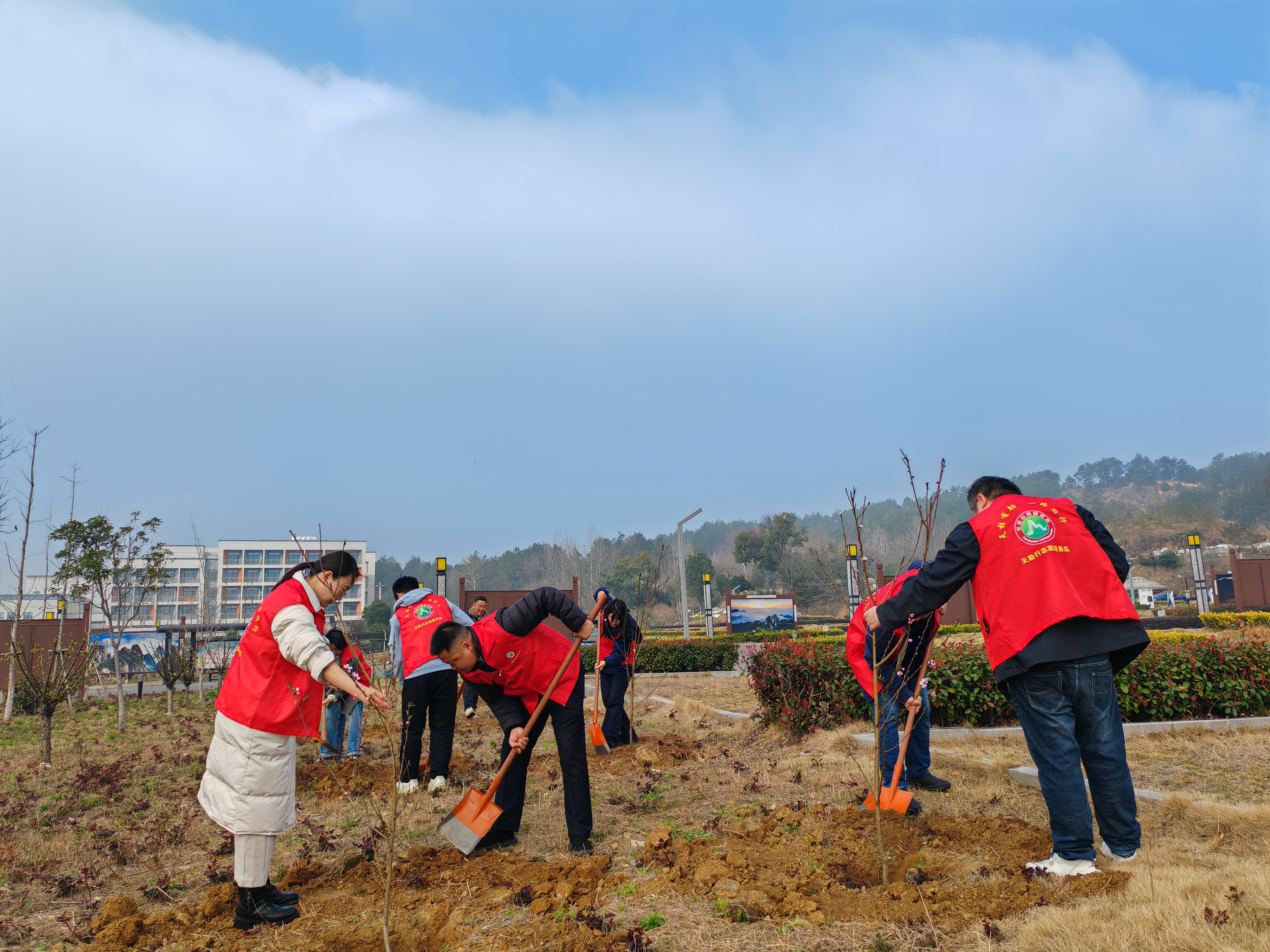
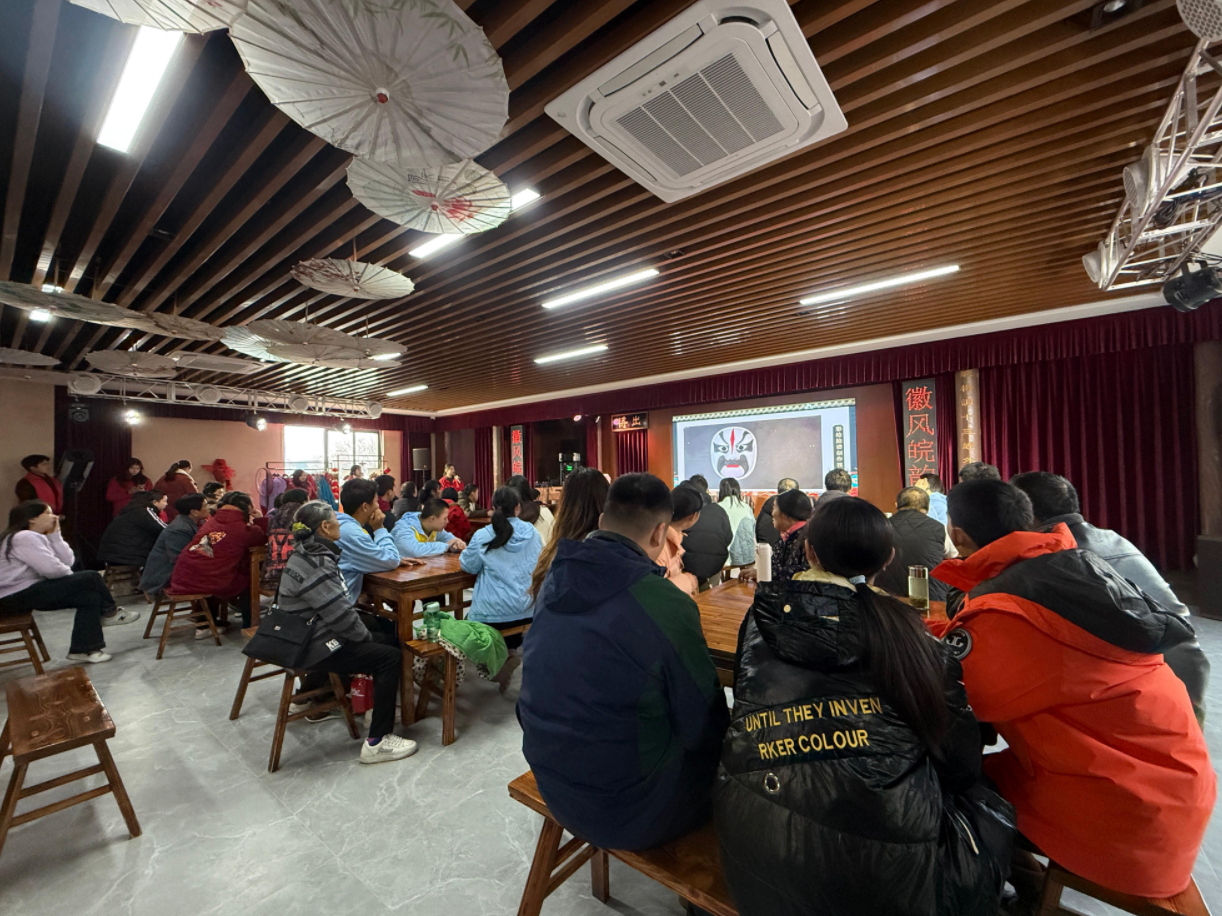
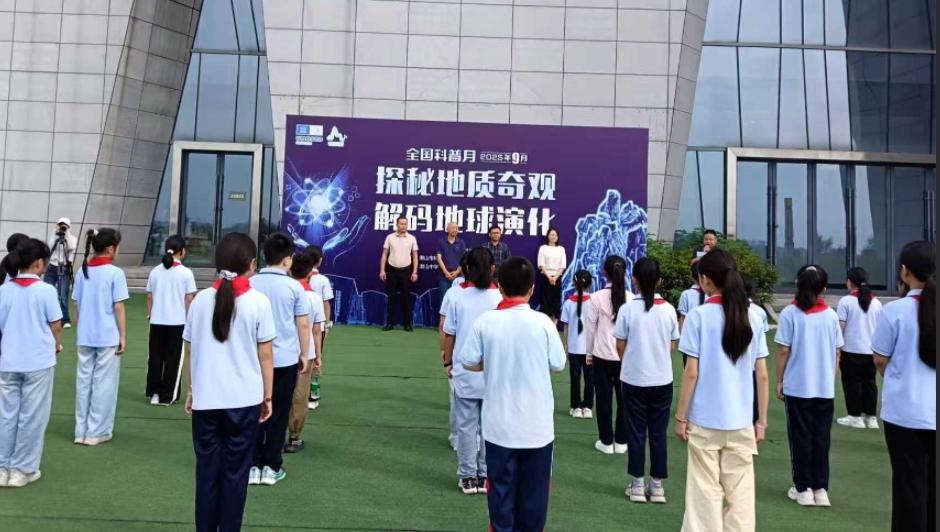
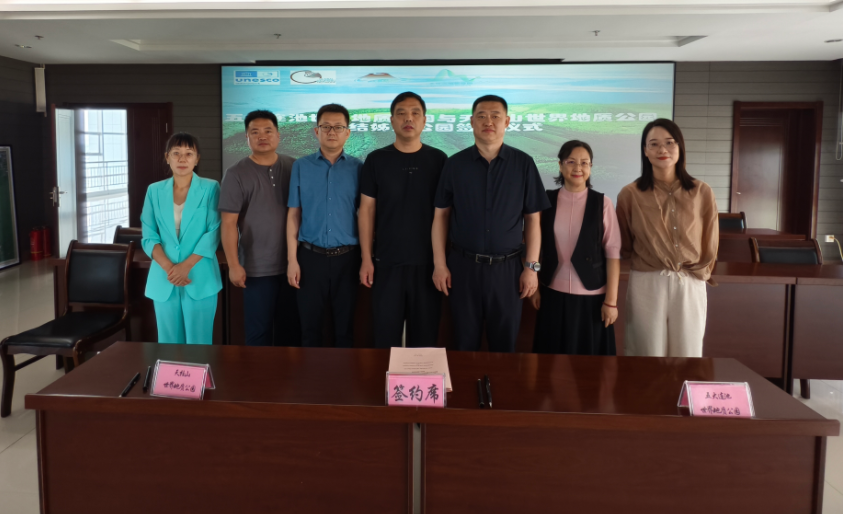
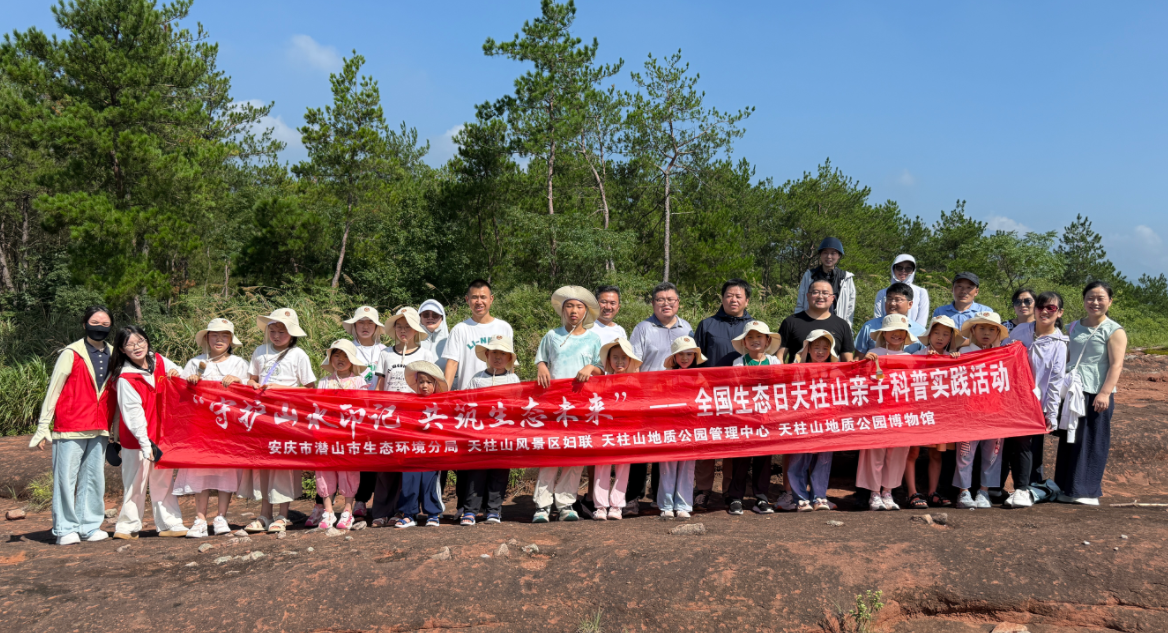
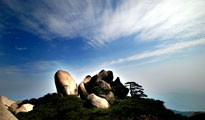
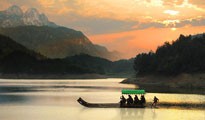
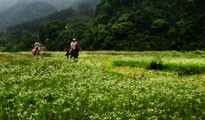
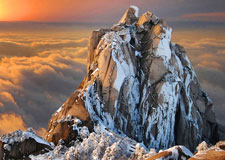
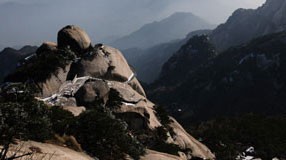
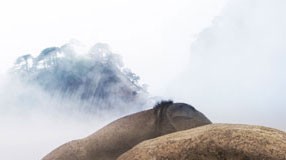
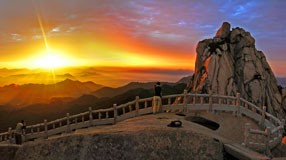
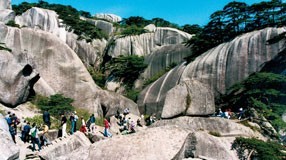
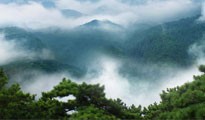
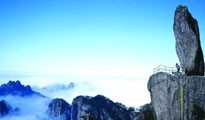
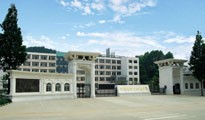
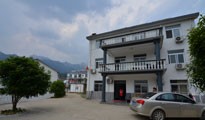
April 22, 2024 is the 55th World Earth Day, and the theme of this year's Earth Day is "Planet vs. Plastics". In order to thoroughly study and implement the spirit of the 20th National Congress of the Communist Party of China, publicize Xi Jinping Thought on Ecological Civilization, guide the whole society to establish the concept of ecological civilization of "respecting nature, conforming to nature, and protecting nature", promote the construction of beautiful Qianshan, and jointly build an earth home where man and nature coexist in harmony, Tianzhushan Global Geopark, Anqing Qianshan Ecological Environment Branch and Qianshan Pailou Central Primary School jointly carried out the 55th "World Earth Day" and the 5th Asia-Pacific Geopark Week Science Popularization Campaign. In the form of museum-school cooperation and joint construction and common benefit, Tianzhushan Geopark will give full play to the social education function of the museum and jointly build a "second classroom" for popular science education.
More
Details
UNESCO’s Executive Board today approved the
designation of 13 new Geoparks for sites demonstrating the diversity of the
planet’s geology.
The world network now numbers 140 UNESCO Global Geoparks in 38 countries.
The newly designated sites are:
Famenne-Ardenne,
Belgium
Three components characterizing the Famenne-Ardenne
Geopark are clearly visible in the landscape: Famenne, to the north, is a large
depression with a schistose substratum. The Ardennes, to the South, form a vast
plateau mainly composed of sandstone rocks. Between the two, the Calestienne
presents a calcareous bedrock, rich in karst phenomena. The karst of this
region is emblematic and its geological evolution, with disappearing and
reappearing rivers, sinkholes and remarkable caves, has helped fashion the Geopark’s
omnipresent human activity. Limestone water is, moreover, essential in the
brewing of the famous and typical ‘Rochefort Trappist’ beer.
Percé,
Canada
The Percé Geopark in Canada is at the heart of the
large Appalachian Mountain chain along eastern North America. The mountain
formation and the magmatic and tectonic events of the area link to the opening
of the Atlantic Ocean during the Jurassic and the Cretaceous periods (ca. 150
Million years ago). Over the last twenty thousand years—the last Ice Age—the
Quebec segment of this chain has been submitted to the erosive action of
glacial elements that gave the landscape its current shape. The territory is
home to many ecosystems that feature diverse fauna and flora. Percé’s main
economic activities centre on tourism, fishing and forestry.
Guangwushan-Nuoshuihe,
China
The Guangwushan-Nuoshuihe Geopark is located in
Bazhong City, Sichuan Province. Situated at the junction of the southern
Central Orogenic Belt (the Qinling) and Yangtze Block, the area displays
natural landscapes such as karst and tectonic landforms, waterfalls and ponds.
It is an important place for the analysis of the geological evolution of
peripheral basins, because of its location in the transition zone between
southern and northern karst landforms. The celebrated 2,000-year-old Micang
Ancient Road, connecting Shaanxi and Sichuan Province, winds through this
landscape, where cultures of different dynasties and types have left their
traces.
Huanggang
Dabieshan, China
Huanggang Dabieshan Geopark is located in Hubei
Province, in eastern China. It demonstrates the geological evolution of the
region, notably the collision between the tectonic plates of North China and
the Yangtze. The oldest continental nucleus of the mountain belt, which
resulted from this collision, is a combination of a garnet-biotite-gneiss and
greenstone belt (Muzidian Group). These rocks were formed under high pressure
and high temperatures and are more than 2.8 billion years old. The biological
diversity of the region makes it one of China’s Seven Major Gene Pools.
Beaujolais,
France
The Beaujolais Geopark is located in a region of
France known around the world for its twelve protected vineyard appellations.
But Beaujolais country also features other remarkable geological and culture
treasures. The Beaujolais’ complex geology, formed over 500 million years,
underpins a diversity of landscapes, natural habitats and building stones used
in local construction. The geological heritage and history of the Beaujolais
has influenced the lives and culture of its inhabitants, in the past and
continues to do so.
Ciletuh-Palabuhanratu,
Indonesia
Ciletuh-Palabuhanratu Geopark in West Java, is named
after the Ciletuh River and Palabuhanratu (Queen harbour), in reference to the
legend about a South Ocean Queen who was said to be the guardian of the area.
The oldest rocks in the Geopark were formed by the subduction process between
the Eurasian and the Indian Ocean tectonic plates. Currently three village
communities maintain their ancestral Kasepuhan traditions, notably in
agriculture and paddy farming (called tatanen).
Rinjani
Lombok, Indonesia
The nearly circular-shaped Lombok Island with its 70-kilometre
‘tail’ of a peninsula, is one of the Sunda Kecil Islands, located between Bali
and Sumbawa. The geology of Lombok Island is dominated by Quaternary
calc-alkaline volcanoes covering the Neogene clastic sedimentary rocks, the
Oligo-Miocene volcanics and the Palaeogene-aged intrusive igneous rocks. The
formation of the volcanic complex is due to the subduction of the Indian Ocean
tectonic plate under the edge of the South East Asia tectonic plate. The Sasak
population of Lombok is multi-ethnic and multicultural. The diversity of the
Sasaks’ cultural heritage is reflected in buildings such as temples and old
mosque.
Izu
Peninsula, Japan
Izu Peninsula Geopark is located in the southeast of
Honshu Island. It is a unique meeting place of two active volcanic arcs and
various and ongoing phenomena linked to tectonic plate collision. The area’s
uninterrupted volcanic history over the past 20 million years is unmatched
anywhere. Geothermal activity has also endowed this area with some of Japan’s
most famous hot springs. Izu has witnessed many natural disasters, such as
volcanic eruptions, earthquakes and tsunamis, which have contributed to local
beliefs as communities began to worship deities that were supposed to rule over
natural forces and built over 90 shrines scattered across the Geopark.
Mudeungsan
Area, Republic of Korea
Mudeungsan Area Geopark is centred around Mudeung
mountain, which towers high above Gwangju city. The mountain has long occupied
an important place in the spiritual world of the people of Jeollanam-do, the
former Honam, who see mountaintops as altars for celestial worship. Its
geoheritage ranges from large polygonal jointed tuff columns, recording at
least three phases of Cretaceous volcanic activity, extensive
periglacial-produced landforms, unusual microclimatic environments, dinosaur
footprints and trackways, and a variety of other geological and
geomorphological features.
Conca
de Tremp Montsec, Spain
Conca de Tremp Montsec Geopark in north-eastern Spain,
close to the borders of France and Andorra, is characterized by a set of
East-West oriented mountain ranges and basins. This alignment corresponds to
the various overthrust nappes making up the southern slope of the Central
Pyrenees. The geological record covers the past 550 million years. The rich
natural heritage of the southern slopes of the Pyrenees is
internationallyrecognized as a natural laboratory for sedimentology, tectonics,
external geodynamics, palaeontology, ore deposits and soil science. The area
includes a very broad representation of the evolution of life on Earth and
includes sites from the Permian to the Palaeogene: fossils of vertebrates,
invertebrates and plants.
Ngorongoro
Lengai, Tanzania
One of the most important features of the Ngorongoro
Lengai Geopark is the Ngorongoro Crater, home to great wildlife diversity, such
as elephants, black rhinos, lion, gazelles, and other large mammals that
co-exist with humans. The Oldoinyo Lengai ‘Mountain of God’ or ‘Holy Mountain’
in the Maasai language is the youngest and most active stratovolcano (2,962 m)
of the Ngorongoro Volcanic Highland located at its northern end. This volcano
produces natrocarbonatite lava that contains almost no silicon, which is
unique. The Olduvai Gorge, the most important paleoanthropological site in the
world, has volcanic beds formed in the Pliocene Epoch with an unsurpassed
record of past environments, including hominid fossils, as well as Middle and
Late Stone Age artefacts and a wide range of fossilized fauna.
Satun,
Thailand
Satun Geopark is known as a peaceful place of great
natural beauty. Multiple cultures and groups, including Buddhists, Muslims,
Christians, and smaller groups, such as the Semung or Maniq and Urak Lawoi (or
Chao le in Thai language), live here together in harmony in this area. It is
well known as the land of Palaeozoic fossils due to their abundance, high
diversity and remarkable succession of fossil including trilobites,
brachiopods, stromatolites, conodonts, graptolites, tentaculites and
nautiloids. The inhabitants’ main economic activities centre on agriculture,
fishery, tourism, and small local business.
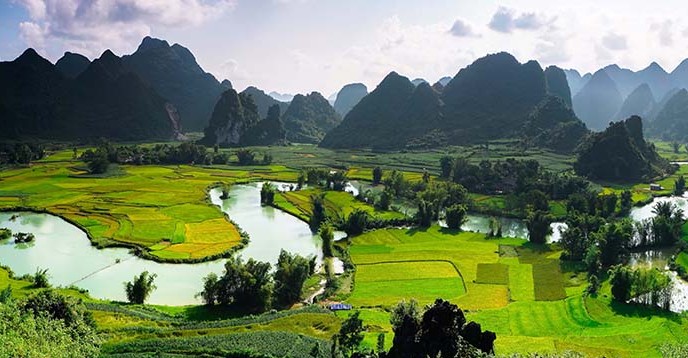
Cao
Bang, Viet Nam
The Cao Bang Geopark in a mountainous area in the
northeast of the country. Geologically Cao Bang Geopark can be divided into two
distinct parts by the so-called Cao Bang-Tien Yen deep-seated active fault. The
eastern part of the area is composed of Palaeozoic limestones. The western part
features sedimentary rocks, pillow basalts, ultra-mafic and granitic intrusions
rich in minerals and hydrothermal alterations. The majority of its population
belongs to one of nine different ethnic groups with distinct, rich cultural
identities and traditions.
UNESCO Global Geoparks are territories that promote
geodiversity through community-led initiatives to enhance regional sustainable
development, notably through sustainable tourism. They help monitor and promote
awareness of climate change and natural disasters, and many help local
communities prepare disaster mitigation strategies.
The UNESCO label helps designated sites and their
inhabitants enhance the value of their geological and human heritage and boost
awareness raising activities. It also serves to share experiences and best
practices within the framework of the Global Geopark Network.