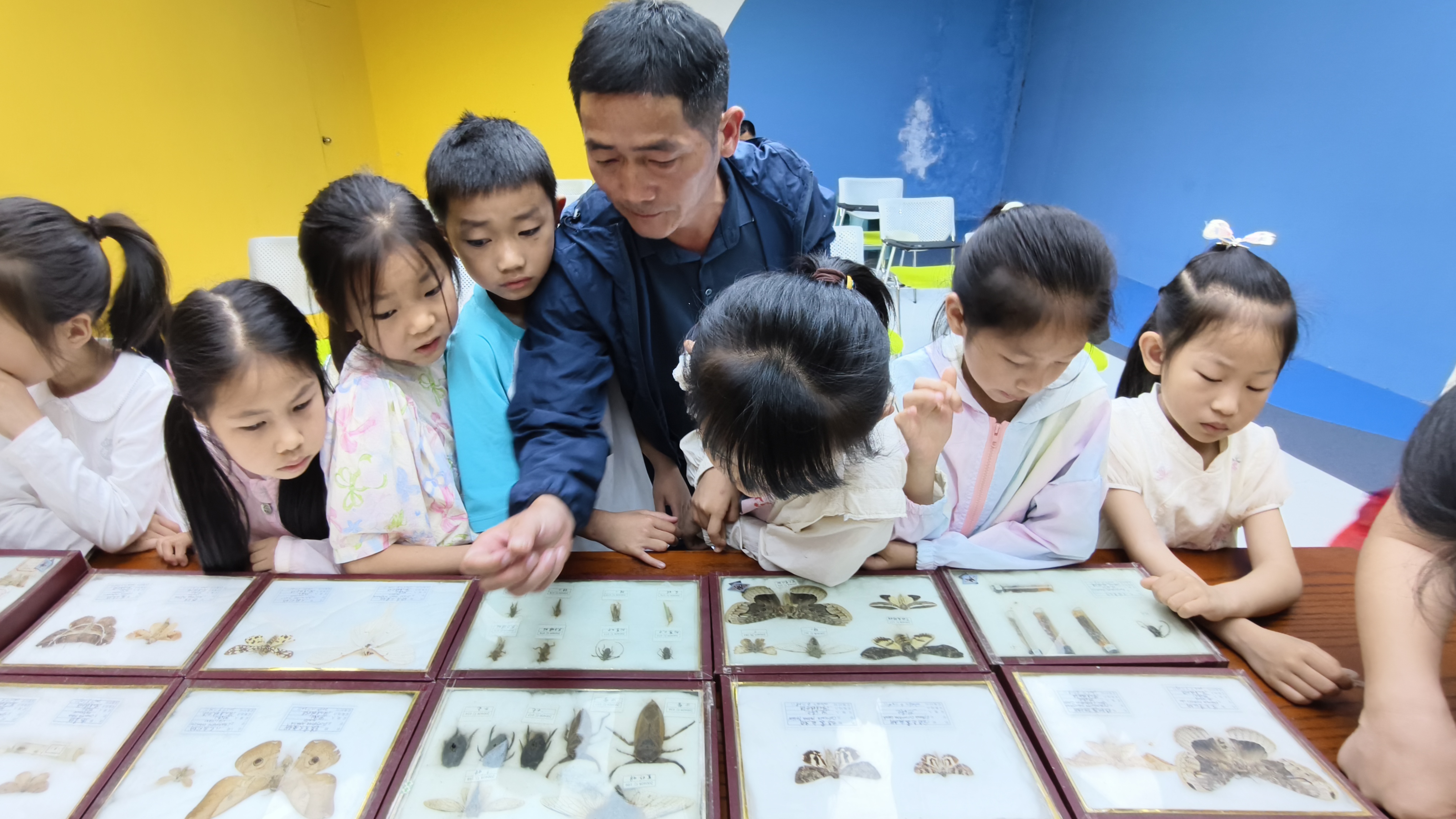
To popularize earth science knowledge and enhance awareness of natural resource conservation, Tianzhushan UNESCO Global Geopark will host a series of science popularization activities for the 57th World Earth Day and the 7th Asia Pacific Geopark Week. Through offline popularization and online interaction, we will explore the mysteries of geology and protect our common homeland.
More
Details
A research
achievement by the team led by Huang Song from Anhui Normal University has been
officially published in the international zoological taxonomic journal ZooKeys. The former Cynops orientalis subsp. qianshanensis has, following systematic
taxonomic research, been formally elevated to full species status: Hypselotriton qianshan, commonly known
as the Qianshan newt.
This population
was named as a subspecies of the Oriental fire-bellied newt (Cynops orientalis) in 2012, and its
taxonomic status had long been debated. Using morphological measurements and
molecular systematic analyses, the research team confirmed that the Qianshan
newt shows significant genetic divergence from the Oriental fire-bellied newt.
The Yangtze River forms a natural geographic barrier between them, and the
Qianshan newt exhibits stable and distinctive morphological traits, fully
meeting the criteria for recognition as an independent species.
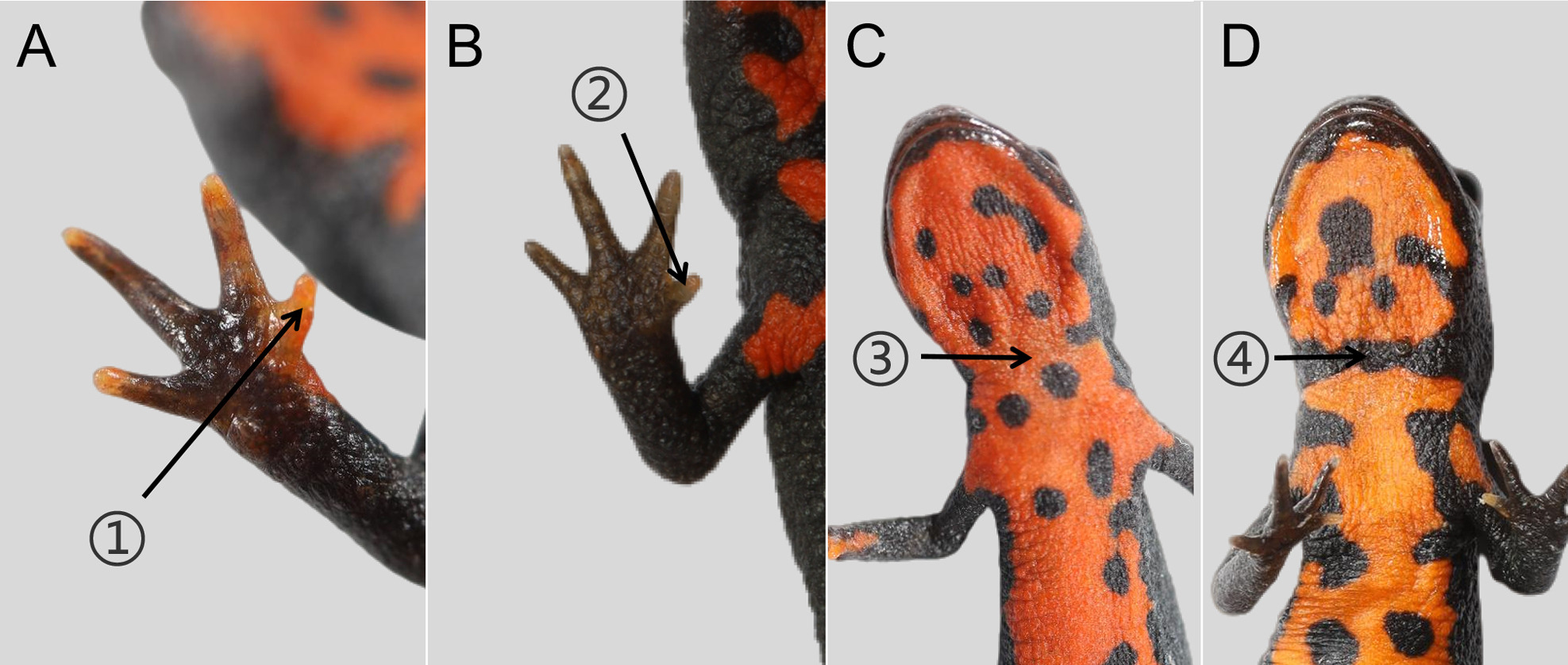
Dorsal and ventral overview of Hypselotriton qianshan showing overall morphology.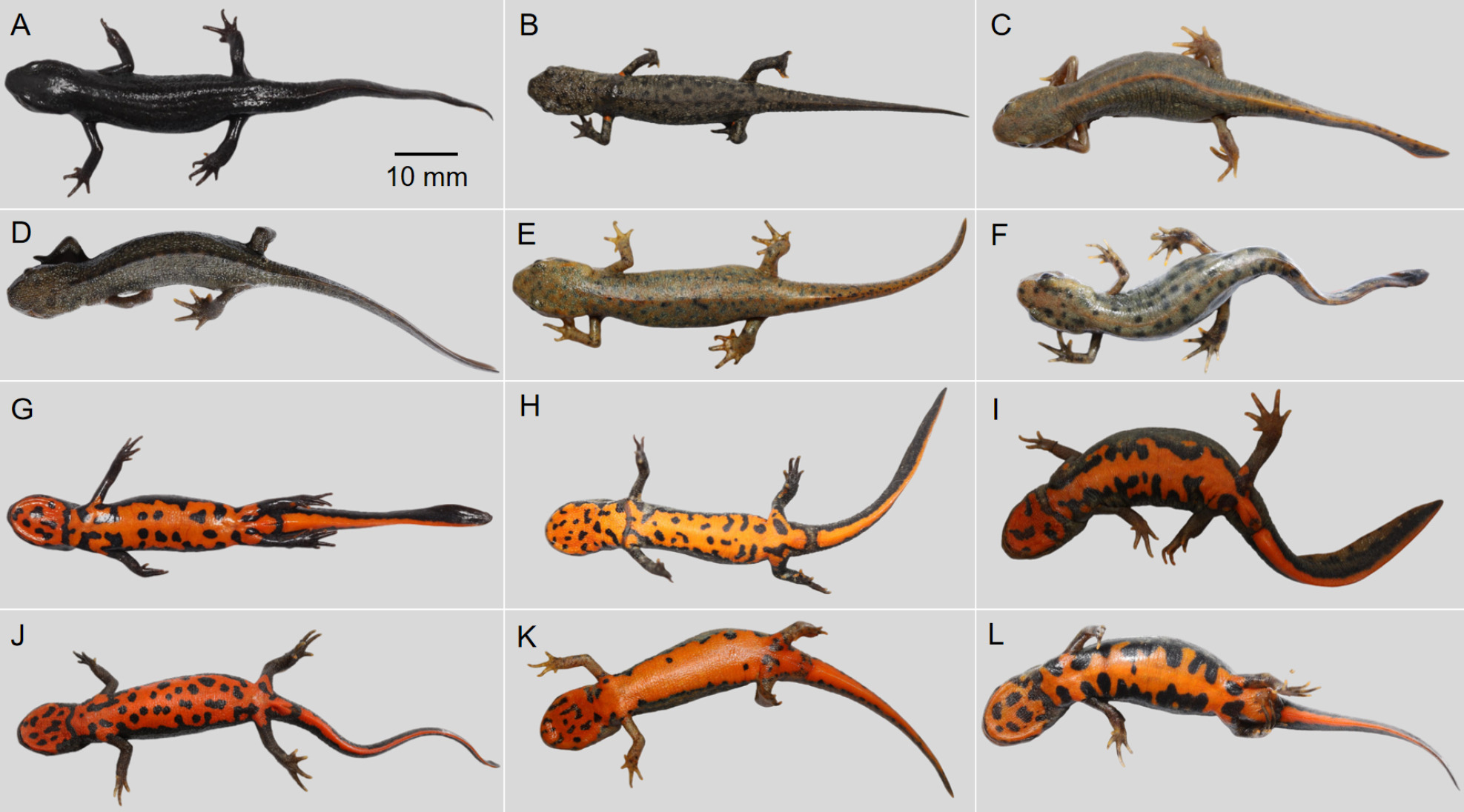
The type
specimen of the Qianshan newt was collected in Qianshan City, Anhui Province.
Its core distribution is in the Dabie Mountains, where it mostly inhabits
shallow freshwater habitats such as rice paddies and mountain streams, adapted
to moist and freshwater environments. It has clear diagnostic features: a
unique orange-red patch on the first digit, an discontinuous vertebral stripe,
and interrupted or absent black abdominal stripes — all of which readily
distinguish it from closely related species.
This taxonomic
revision brings the total number of species in the Chinese genus Hypselotriton to 12, filling a gap in
amphibian taxonomic research. It fully demonstrates the exceptionally high
biodiversity value of Tianzhushan UNESCO Global Geopark and the Dabie Mountains
region, and provides an important scientific basis for the conservation,
research monitoring, and ecological management of regional amphibians.